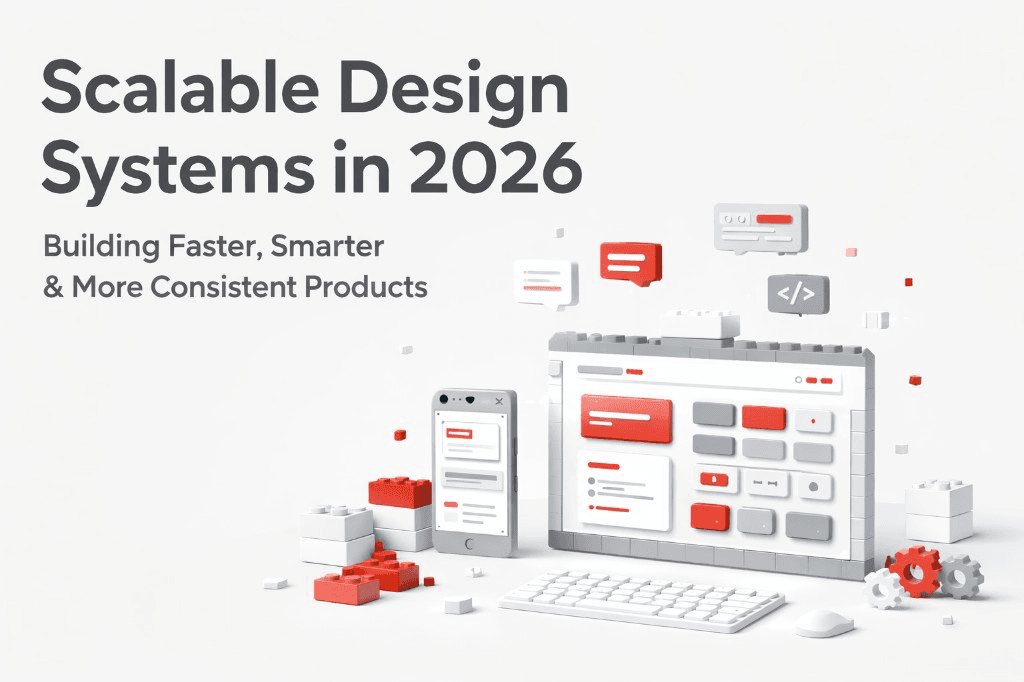
As digital products become more complex, the need for a unified design language has never been greater. A scalable design system is no longer just a luxury; it's a fundamental requirement for teams that want to maintain speed, consistency, and quality at scale.
The Benefits of a Scalable Design System
A well-built design system provides a single source of truth for both designers and developers, leading to several key benefits:
Increased design and development speed
Improved brand and UI consistency
Easier maintenance and updates
Improved collaboration between designers and developers
Key Trends Shaping Design Systems
In 2026, systems function as product infrastructure with token-based architecture, component-driven workflows, AI-assisted audits and documentation, and stronger cross-platform consistency.
Design systems as product infrastructure
Design tokens as the backbone
Component-driven development
AI-assisted system maintenance
Cross-device consistency standards
Scalable design systems are redefining modern product delivery. Teams that invest now are better positioned to handle future complexity while maintaining speed, consistency, and quality.